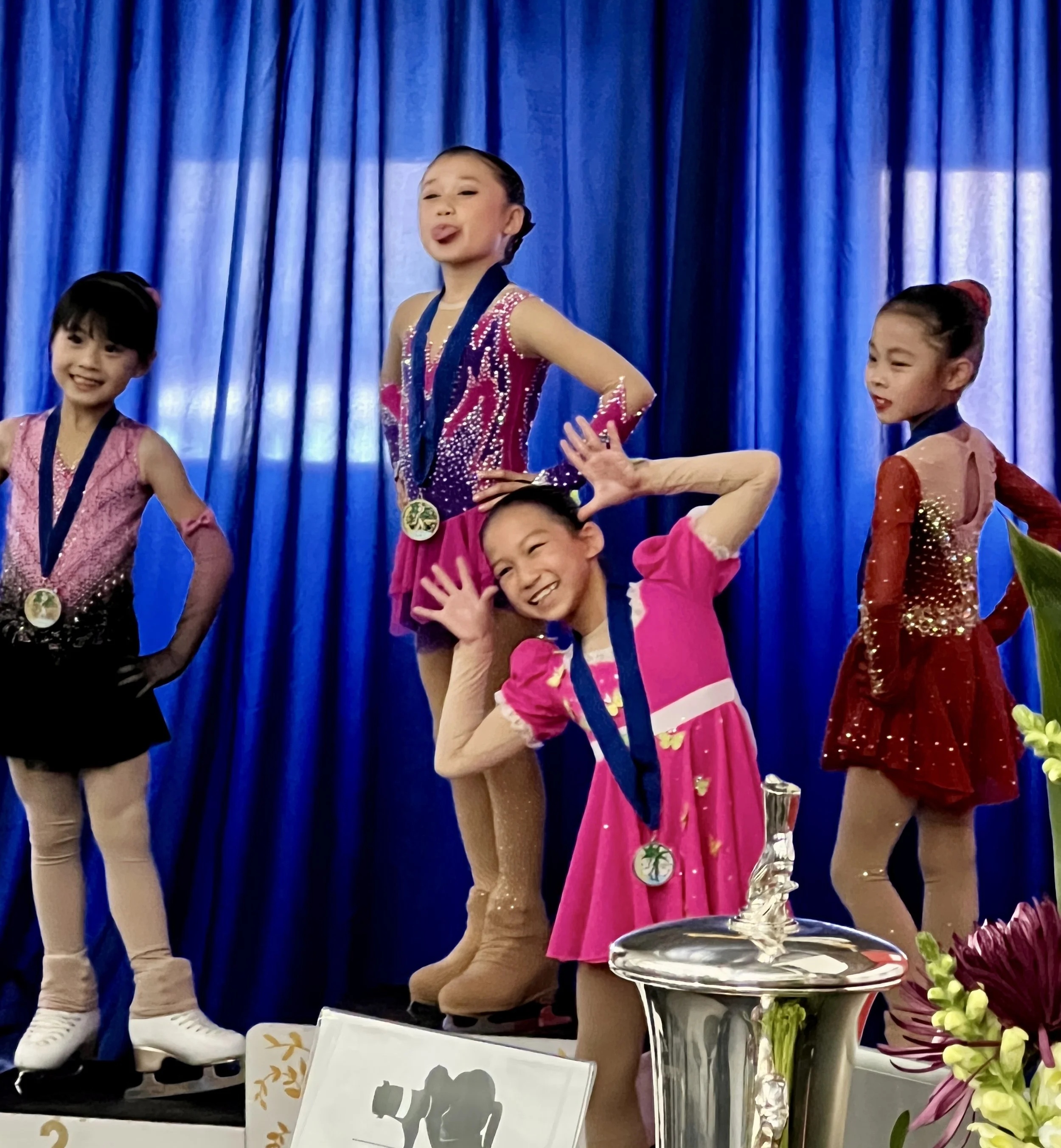
When Is It Time to Enter a Competition?
For Parents of Beginner Figure Skaters
One of the most common questions I hear from skating parents is: “How do I know when my skater is ready for a competition?” And the honest answer is: there is not one perfect answer for every skater.
Some coaches and parents believe it is never too early. Other families feel more comfortable waiting until their skater is older, more independent, or truly understands what it means to compete.
I tend to land somewhere in the middle.
My belief is this: when your skater thinks competing sounds fun, it may be time to try.
Not because they are ready to win, become “serious” skaters, or because every other skater is doing it, but because a first competition can be a wonderful learning experience when it is introduced at the right time, in the right event, with the right expectations.
Competition should start as an experience, not a pressure point.
For beginner skaters, the first competition should not feel like a final exam. It should feel like a special skating day.
U.S. Figure Skating describes Compete USA as a fun, introductory competitive experience for beginning skaters. Learn to Skate USA encourages skaters to “perform your skills, make new friends, and start your competitive journey.”
That is exactly how I like parents to think about a first competition.
It is not just about placement. It is about learning how to:
prepare for a goal
skate in front of others
follow directions in a new environment
handle excitement and nerves
receive feedback
celebrate effort
support other skaters
Those lessons are valuable long before a skater is landing advanced jumps or dreaming of qualifying competitions.

What level does a skater need to be?
Many parents are surprised to learn that competitions are not only for advanced figure skaters.
Beginner competitions often include events for Snowplow Sam, Basic Skills, Aspire, Excel, Adult, Showcase, hockey skills, and more. That means a skater does not have to be doing spins, jumps, or private lessons for years before they are allowed to participate.
A young beginner may enter an event where the required skills are very simple. An older beginner may enter a Basic Skills event. A creative skater may enjoy Showcase. A skater who is still building confidence may start with an elements event instead of a full program with music.
The key is choosing the right event for the skater’s current level.
This is where a coach’s guidance is very important. Parents should not have to figure this out alone. A coach can help determine whether the skater should enter an elements event, a program event, a showcase event, or wait for the next opportunity.
Signs your skater may be ready
Your skater may be ready to try a first competition if:
They like the idea of performing and wearing a special skating outfit.
They enjoy showing family what they have learned.
They can follow basic directions from a coach.
They can get on the ice without panic.
They are willing to practice a short routine or skill list.
They understand, at least a little, that other skaters will be there too.

Notice I did not say, “They are ready to win.”
For a first competition, interest matters more than perfection.
If a skater is excited, curious, and willing to try, that is often enough to begin the conversation.
Signs it may be better to wait
There are also times when waiting is the better choice.
A skater may need more time if they are extremely anxious about skating in front of others, cry at the thought of competing, cannot separate from a parent, are still unsafe moving around the ice, or are being pushed into the idea by adults rather than showing interest themselves.
It may also be better to wait if the family schedule is already overloaded, the cost feels stressful, or there is not enough time to prepare calmly.
A competition should add excitement and purpose. It should not turn skating into a battle at home.
Waiting is not failure. Sometimes giving a skater a little more time helps the first competition become a much happier experience.
The parent’s role matters
A child’s first competition experience is shaped just as much by the adults as it is by the skating.
Parents can make the day feel exciting, safe, and positive — or they can accidentally make it feel stressful.
Before entering, ask yourself:
Can I celebrate effort more than placement?
Can I stay calm if my child is nervous?
Can I avoid comparing my skater to other skaters?
Can I let the coach guide the skating part?
Can I help my child see this as a learning experience?
Beginner skaters are watching how we respond. If adults treat the day like a high-pressure event, children feel that. If adults treat the day like a chance to learn, perform, and have fun, children usually feel that too.

How much preparation is needed?
This depends on the event.
Some beginner events require only a small list of skills. Others involve a program with music. A simple first program may take several weeks to prepare, especially if the skater is new to performing.
In general, I like families to have enough time for the skater to feel familiar with the skills, the music if using music, the starting position, the ending position, and what to do if something does not go quite as planned.
That last part is important.
Skaters need to know that mistakes are normal. If they fall, they get up. If they forget something, they keep going. If they finish with a smile, that is a win.
Should every skater compete? No.
Competition can be wonderful, but it is not the only valuable skating experience.
Some skaters love shows. Some love group classes. Some love testing. Some love skating recreationally with friends. Some begin with competitions and later decide they prefer another path.
But I do believe every skater and every skating family should be given the opportunity to learn about all the avenues available in the sport of figure skating.
Figure skating offers so many different paths: Learn to Skate, performances, exhibitions, competitions, testing, Excel, Aspire, Theatre On Ice, synchronized skating, pairs, ice dance, recreational skating, and more. Families do not need to choose every path, but they should at least know those paths exist.
In my opinion, part of a coach’s job is to educate families, not just teach skills. A coach should help parents understand what opportunities are available, what may be appropriate for their skater, and what each option might look like.
When a coach does not share that information, I believe it does a disservice to the skater and the family. Parents cannot make informed decisions if they do not know what choices are available.
The goal is not to force every skater into the same lane. The goal is to help each skater discover what motivates them, builds confidence, and keeps them excited to learn.
For some children, competition is the spark.
For others, it can wait.
But every family deserves the information, guidance, and opportunity to decide what is best for their skater.
My best answer
So, when is it time to enter a competition? When:
Your skater thinks it sounds fun.
The event matches their current level.
The adults can keep the focus on learning.
There is enough time to prepare without panic.
The goal is confidence, not just a medal.
It should give your skater a chance to say:
“I tried something new.”
“I was brave.”
“I learned.”
“I want to do it again.”
And if they say that, the competition was a success.
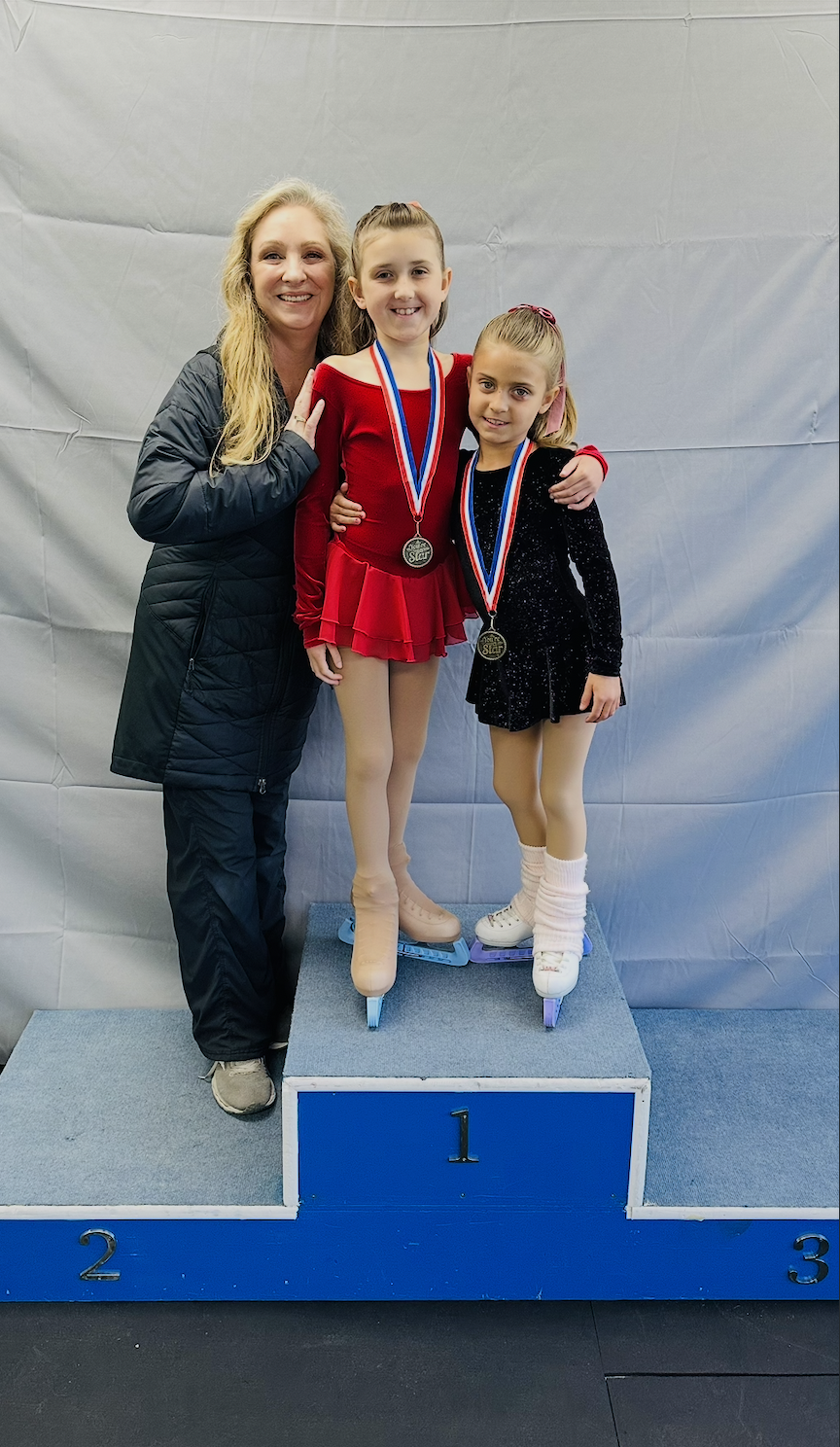
Need help deciding if your skater is ready?
Every skater is different, and every family has different goals. If you are unsure whether your child should enter an upcoming competition, what event to choose, or how much time you need to prepare, I would be happy to help guide you.
Contact me for personal guidance, and together we can decide the best next step for your skater’s first competition experience.
Would you like personalized guidance on finding the best rink in your area?
I’d be happy to help—reach out anytime!